
Mobile Gaming: Are Slots or Live Dealer Games Better on Smartphones?
There is no universal winner.
Slots are built for phones, light and portrait-friendly, forgiving of a shaky connection. Live dealer tables ask more of your phone and your data plan. In exchange they deliver a real dealer, a real wheel or shoe, and other players sharing the table with you.
The right pick comes down to your connection quality, your data budget, and whether you want a fast solo game or a social table experience.
How Much Data Slots and Live Dealer Tables Actually Pull
Slots load once and then run mostly on your phone’s own processor.
A live dealer table works very differently. It behaves like a continuous video stream, similar to watching a sports broadcast, keeping your connection and your data meter working for as long as you’re seated at the table. Slots ask your phone to render a handful of animations locally after an initial load, then sit mostly idle on the network between spins. A live table asks your phone to decode video frame after frame for the whole session, which explains the sharp gap in their data appetite.
Reported figures for exact megabytes-per-hour vary wildly across gambling blogs. Some cite numbers as low as 30 MB an hour for slots, others as high as 300 MB, and live dealer estimates are just as scattered depending on the source. None of those numbers come from a disclosed, testable methodology, so a healthy dose of skepticism toward any single figure quoted online is warranted. Even without a trustworthy precise number, the pattern stays consistent. Live streaming from providers like Evolution or Pragmatic Play Live pulls noticeably heavier data, likely several times the usage of an equivalent play session on a comparable slot title, and that gap grows further at higher video quality settings.
| Factor | Slots | Live Dealer |
|---|---|---|
| Data draw (illustrative, not measured) | Roughly tens of megabytes per hour | Roughly low hundreds of megabytes per hour |
| What drives usage | Initial asset load, then mostly local rendering | Continuous H.264 video stream, higher on HD settings |
| Sensitivity to video quality settings | Minimal | High, dropping stream quality cuts usage substantially |
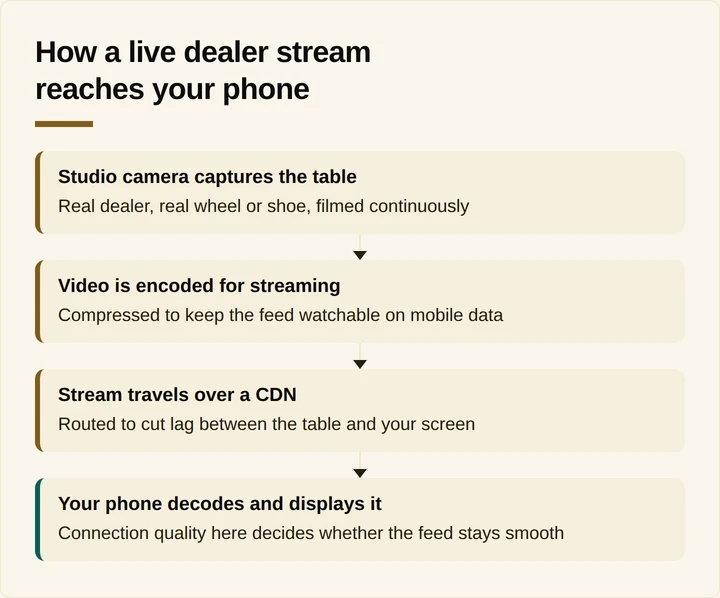
Anyone watching a data cap should treat slots as the safer default and save live dealer for Wi-Fi or an unlimited plan.
Portrait Screens Favor Slots, Landscape Favors the Table
Screen orientation makes a real difference on a phone.
Most modern slot titles from studios like NetEnt or Play’n GO are designed portrait-first. You hold the phone naturally, one thumb taps the spin button, and the reels, paytable, and balance all fit without forcing you to rotate anything mid-session. It’s a layout built around how people actually hold a phone, which is a big part of why slots feel so native to mobile in the first place.
Live dealer games are a different story. The video feed, the betting grid, the chat panel, and the dealer’s table all compete for the same screen at once. Many operators do offer a portrait layout, but it usually compresses the betting area into something fiddly on a smaller display, and tapping the right spot under pressure gets harder. Rotate to landscape and the table opens up properly. You can see the cards, the roulette wheel, or the dice clearly, and the betting spots become large enough to tap without missing, though it does mean holding the phone with two hands or propping it up on something.
That’s a real tradeoff, not a small one. If you play mostly one-handed on transit or standing in line, the landscape requirement alone can decide the question for you.
Battery Drain and Phone Heat Over a Long Session
Video streaming, GPS, and screen brightness are consistently the heaviest battery drains on any smartphone.
Live dealer play checks two of those boxes at once. A constant video decode runs alongside a bright screen held at full brightness for visibility, and both keep drawing power for the length of the session. Slots decode nothing continuously; they render animations locally, which is lighter work for the chip and easier on the battery over an hour of play.
Exact battery-percentage-per-hour figures depend too much on your specific phone, its age, screen size, and background apps to state a single number that would hold true for everyone. The relative pattern stays consistent across devices, even though no single figure applies to every phone on the market. An hour of live streaming plus active screen use typically drains a battery at a noticeably fast clip at full brightness. Heat follows the same logic, since sustained video decoding keeps the processor and modem working hard for the length of the session. A phone can feel warm after forty minutes at a live table, and a long session away from a charger is where that shows up most.
A slot session is close to setting the phone down with charge still left in the tank at the end. A live table session, especially in landscape with the screen at full brightness, is closer to a long video call.
What Happens When Your Connection Drops Mid-Spin vs Mid-Hand
A dropped connection is the single biggest practical difference between the two formats.
Slots run on a request-response model. You tap spin, the result is calculated, usually server-side for real-money play, and the outcome is sent back and displayed on your screen. If your connection drops right after you tap spin, the worst case is usually a stalled animation and a refresh once you reconnect, with the result either already resolved or the spin simply never registered in the first place.
Live dealer is fragile by design, because it depends on a continuous stream running the whole time a hand is dealt. A drop mid-hand can mean the video freezes, buffers, or disconnects entirely while a real hand is being dealt at a real table with real timing running against you. Most platforms handle this reasonably well. Your bet is already recorded before the round resolves, and results sync once you reconnect, so a bad signal typically doesn’t cost you the wager. Watching a frozen frame while wondering what just happened at the table is a stressful few seconds.
Patchy connections favor slots. Transit Wi-Fi, spotty rural 4G LTE, or a crowded 5G cell at a stadium are exactly the conditions where a request-response game degrades gracefully. A live stream has a much harder time holding up under the same conditions.
Chat, Multiplayer Tables, and Slot Tournaments: The Social Layer
Slots are largely solitary, but tournament and leaderboard features have become common on many platforms.
You compete against other players on speed or score over a set window, without ever seeing or interacting with them directly. It’s competitive in a leaderboard sense, built around scores and rankings.
Live dealer tables build the social layer directly into the game. A real dealer greets you, other players share the table, and most platforms run a live chat panel alongside the video feed. Some tables cap the number of seats and show a live player count, which adds the sense of an actual room with real people at it. For anyone who finds slots isolating, this social layer is the entire appeal of live dealer, and no slot tournament format really replicates the feeling of sitting at a shared table.
There’s a small data cost to that social layer too, since chat panels, live player counts, and any table-side promotions load continuously alongside the video stream itself. It’s minor next to the stream’s own footprint, though it still adds up over a long session if you’re already watching your data closely.
Managing Mobile Data and Playing Within Your Limits
Check your carrier’s Wi-Fi calling and data-saver settings before starting a session, and save live dealer sessions for when you’re connected to Wi-Fi.
Most live dealer platforms also let you drop the stream to a lower resolution manually, which cuts data use substantially without ending the session or logging you out of the table. That small setting change alone can turn a data-hungry session into a manageable one, without giving up the format entirely.
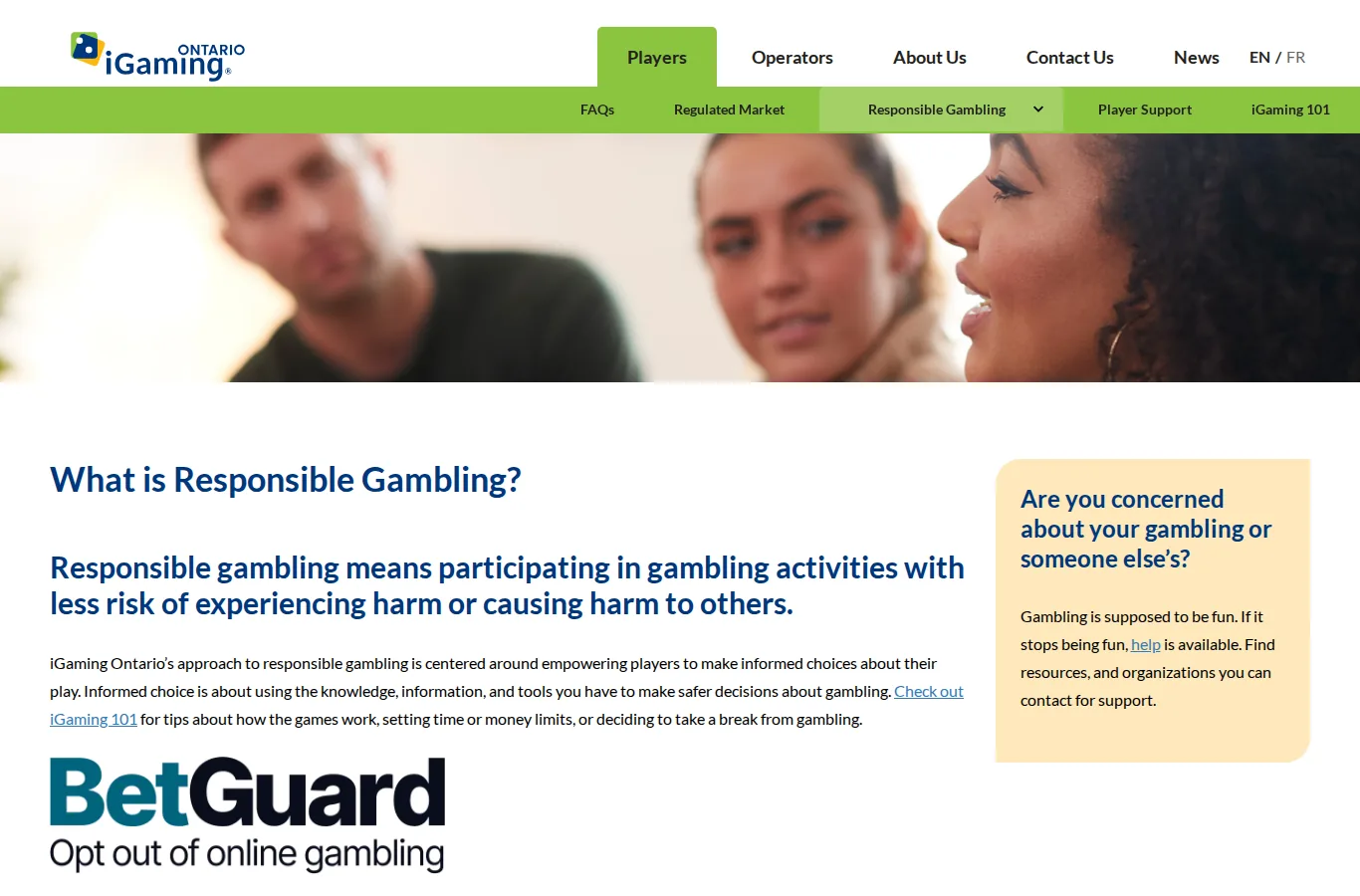
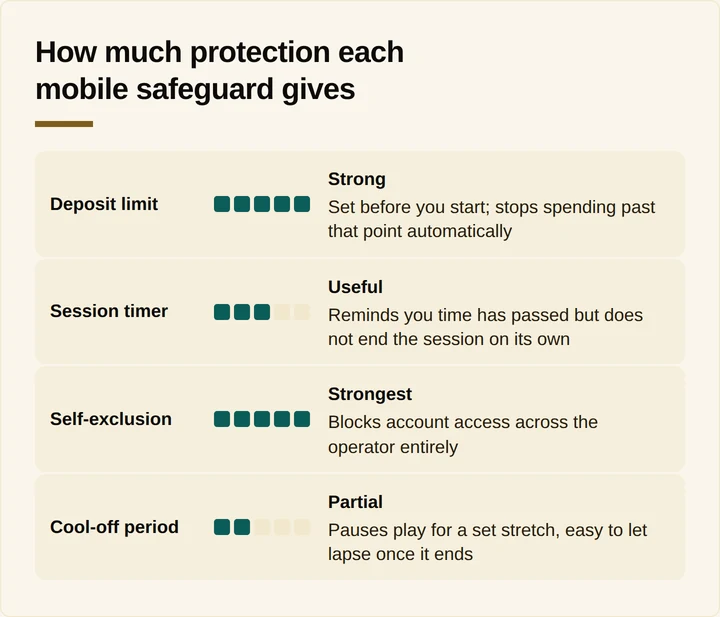
Budgeting data is really just one form of a broader habit. Deciding your boundary before you start is the same principle behind session timers and deposit limits. Ontario’s licensed operators, regulated by AGCO and iGaming Ontario, are required to build these kinds of controls into their platforms as part of responsible gambling in Canada. Using them for data and time the same way you would for a budget is a small habit that pays off over a long session.
None of this is about avoiding either format. It’s about setting the boundary yourself, before your phone’s battery, your data plan, or your bankroll sets it for you instead.
FAQ
Does live dealer really use more data than slots? Yes, consistently, because it streams continuous video the entire time you’re at the table. The exact ratio varies by provider and stream quality, but expect several times the data draw of an equivalent slot session.
What’s the minimum connection speed for live dealer to run smoothly? There’s no single official minimum, since it depends on the platform’s video codec and quality settings. A stable broadband-equivalent connection, whether that’s solid 4G LTE, 5G, or Wi-Fi, handles it comfortably. Slots tolerate a slower or spottier connection much more comfortably.
Does screen size actually matter for live dealer games? It matters here in a way it doesn’t for slots. A small phone screen in portrait mode compresses the betting grid and can make the video feed hard to read. Landscape mode on a larger phone, or propping the phone up on a stand, generally gives a much better view of the table.
What happens to my bet if my connection drops mid-hand on a live table? Most platforms record your bet before the round resolves, so a drop doesn’t typically forfeit your wager. The result syncs once you reconnect. The wait and uncertainty while the stream buffers is usually the most frustrating part of it.
Which one is better if I’m on a limited or prepaid data plan? Slots, without much of a contest. Their lighter, mostly-local data profile is easy to budget for on a prepaid plan. A continuous video stream can eat through a data allowance quickly if you’re off Wi-Fi.
Do slots or live dealer drain the battery faster on a long session? Live dealer, generally, because continuous video decoding plus a bright screen at full brightness both draw noticeably more power over a session. Slots are the lighter load on your battery for an extended stretch away from a charger.
Is 4G enough for live dealer, or do I need 5G or Wi-Fi? 4G LTE can work fine for live dealer on a stable connection. A congested cell or weak signal shows up quickly as buffering or dropped frames. Wi-Fi or a strong 5G connection gives more headroom, especially at higher stream quality settings.
Does an older phone handle one format better than the other? Slots tend to run more comfortably on older hardware since they rely less on continuous video decoding. Live dealer streams push the processor and modem harder, so an older or budget phone may show more lag, heat, or battery drain during a live session.