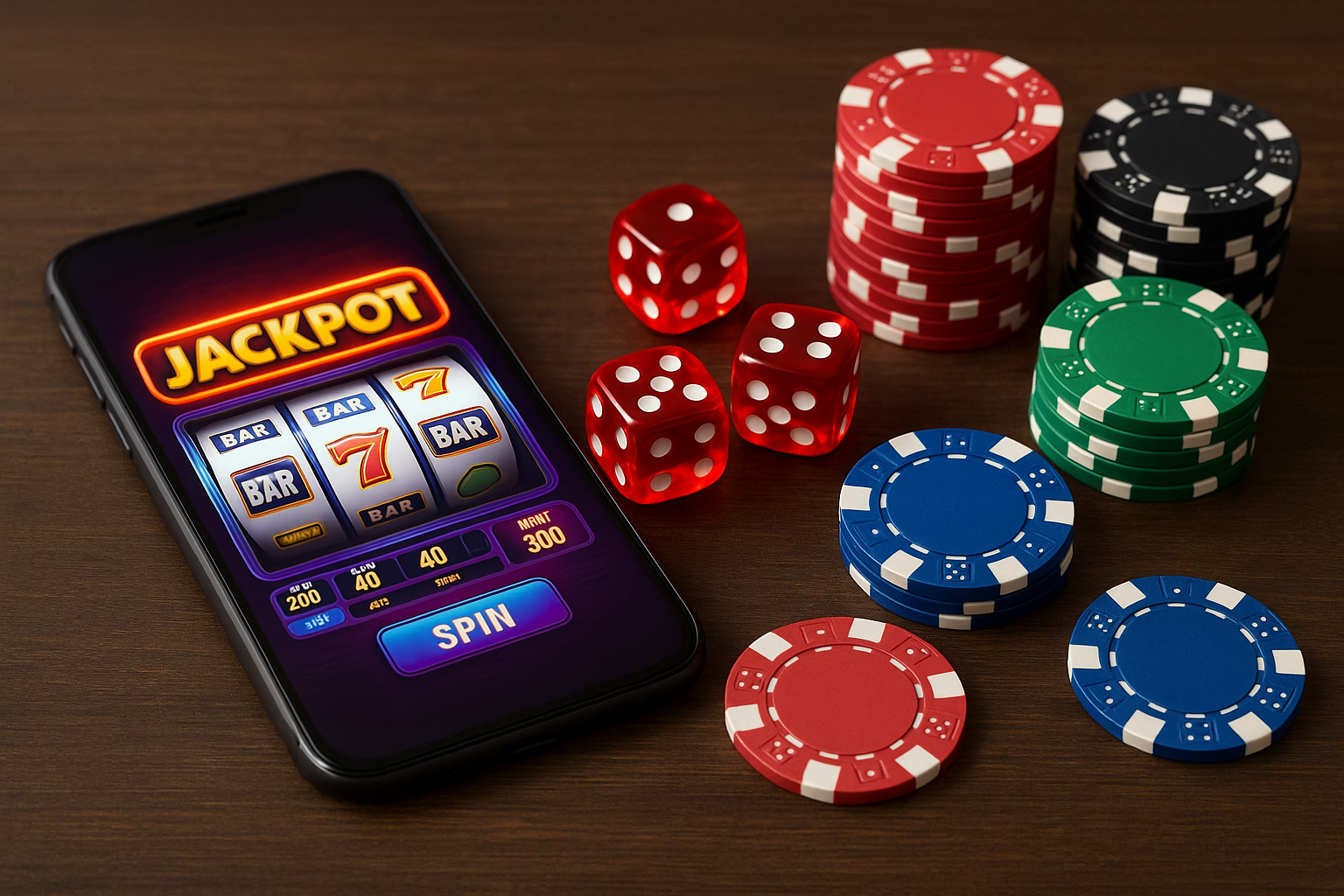
Mobile technology has transformed online casino accessibility, with over 60% of players now preferring smartphones to desktop computers. Industry data shows that best online casinos consistently optimize their game libraries for mobile performance, reflecting broader market demands. The performance and convenience of different game types on smartphones have become critical factors for both operators and players in determining the optimal mobile gaming experience.
Technical Requirements for Mobile Casino Games
Slots and live dealer games impose different demands on mobile devices. Slots utilize pre-loaded game mechanics with minimal bandwidth requirements, consuming 5-15 MB of data per hour at standard graphics settings. The self-contained nature of slot games allows them to function with intermittent connectivity.
Live dealer games require stable real-time video streaming. An HD roulette or blackjack table broadcast consumes 150-300 MB per hour. The minimum recommended internet connection speed is 4 Mbps for stable live game operation. Unstable connections cause delays and broadcast interruptions that disrupt gameplay.
Device Performance Comparison:
| Game Type | Data Usage (per hour) | Minimum Speed | CPU Load | Battery Drain |
| Slots | 5-15 MB | 1 Mbps | 15-30% | 8-12% |
| Live Dealer | 150-300 MB | 4 Mbps | 20-40% | 15-25% |
Modern smartphone processors handle both game types effectively. Slots with advanced 3D graphics load processors at 15-30%, while live games require 20-40% power for video stream decoding. Mid-range devices from the last three years provide comfortable performance for both formats.
Interface Optimization for Mobile Screens
Slots are designed with vertical smartphone orientation in mind. Developers adapt control element placement for convenient thumb access. The betting panel sits at the bottom of the screen, paytables open with a swipe, and the game field occupies the central display area without requiring horizontal scrolling.
Live games are optimized for horizontal orientation. The dealer and table video stream displays in the upper portion of the screen, with the betting interface positioned below. Switching between vertical and horizontal modes requires additional player actions. Some operators offer portrait mode for live games, but functionality becomes limited.
Key Interface Elements:
- Control element sizing follows Apple and Google standards for minimum 44×44 pixel touch targets
- Betting buttons in slots maintain consistent positioning across different screen sizes
- Live game chips adapt dynamically to screen dimensions with zoom capabilities
- Auto-rotate functionality enables seamless orientation switching
Battery Consumption and Performance
Energy consumption differs significantly between game types. Slots consume 8-12% battery charge per hour of continuous play on mid-capacity smartphones. Live games consume 15-25% charge over the same period due to constant video decoder operation and active network connections.
Device heating is more noticeable with live dealer games. Extended sessions exceeding two hours cause temperature increases of 5-8 degrees Celsius. Slots generate less heat due to the periodic nature of load between spins.
Modern processors employ dynamic frequency management to optimize power consumption. During slot gameplay, processor frequency varies based on graphics intensity. Live games require stable frequency for uninterrupted video decoding, which reduces power-saving efficiency.
Connection Stability and Streaming Quality
Slots operate in asynchronous mode with the server. Brief connection interruptions do not affect gameplay. Spin results are saved on the server, session restoration occurs automatically when connection resumes. Players can continue from the interruption point without losing progress.
Live games are critical to channel stability. Connection loss exceeding 10-15 seconds leads to automatic player removal from the table. Bets placed before disconnection are processed according to specific game rules. Reconnection requires selecting a new table, which interrupts the gaming session.
Adaptive video quality helps cope with internet speed fluctuations. Modern platforms automatically reduce broadcast resolution when connections slow. Switching between SD and HD occurs smoothly within 2-3 seconds, according to technical analysis from gaming industry observers. Slots do not require similar adaptation due to pre-loaded graphic resources.
Social Aspects and Interactivity
Slots offer an individual gaming experience without interaction with other participants. Some developers add tournament functions and leaderboards to create competitive elements. Chat features in mobile slots are rarely used due to interface limitations.
Live games include chat with dealers and other players at the table. Mobile chat implementation is often simplified compared to desktop versions. Quick bets and standard phrases are available through preset buttons. Full text input is difficult due to the need to switch to on-screen keyboard.
Interactive elements of live games are adapted for touch control. Players place chips by tapping the game field, increase bets with swipes. This mechanic is intuitive for mobile users. Slots use buttons and sliders for bet management, requiring less precision from players.
Data Usage Management Strategies
For players with limited data plans, understanding consumption patterns is essential. Slots allow extended play sessions without significant data concerns. A typical two-hour session consumes approximately 20-30 MB, equivalent to browsing a few web pages.
Live games require careful data management. Two hours of HD streaming can consume up to 600 MB, approaching monthly limits on restricted plans. Players can reduce consumption by selecting SD quality options, which cuts usage to 80-120 MB per hour while maintaining acceptable visual quality. According to mobile gaming data research, streaming applications represent a significant portion of mobile bandwidth consumption.
Data Saving Strategies:
- Enable low-quality mode in live game settings to reduce bandwidth by 60-70%
- Play slots during mobile sessions and reserve live games for Wi-Fi connections
- Monitor data usage through device settings to track consumption patterns
- Download slot games that offer offline play modes for zero-data entertainment
FAQ
How much data do mobile casino games consume?
Slots consume 5-15 MB per hour at standard graphics settings. Live games in HD quality consume 150-300 MB per hour due to video broadcasting. To save data, reducing video quality to SD or playing via Wi-Fi is recommended.
What minimum internet speed is needed for live games?
Stable live game operation requires connections from 4 Mbps. At lower speeds, video stream delays and broadcast interruptions are possible. Slots operate at speeds from 1 Mbps without noticeable gameplay quality reduction.
What screen size is optimal for mobile casino games?
Slots work comfortably on screens from 5 inches. For live games, devices with 6.5-inch diagonals and larger are recommended, providing simultaneous display of dealer video and betting interface without functionality loss.
Are bets saved during connection loss?
In slots, all bets are saved on the server with automatic session restoration. In live games, bets placed before disconnection are processed according to table rules. During extended disconnection, the player is removed from the table with balance preserved.